From Ash to Black Soap

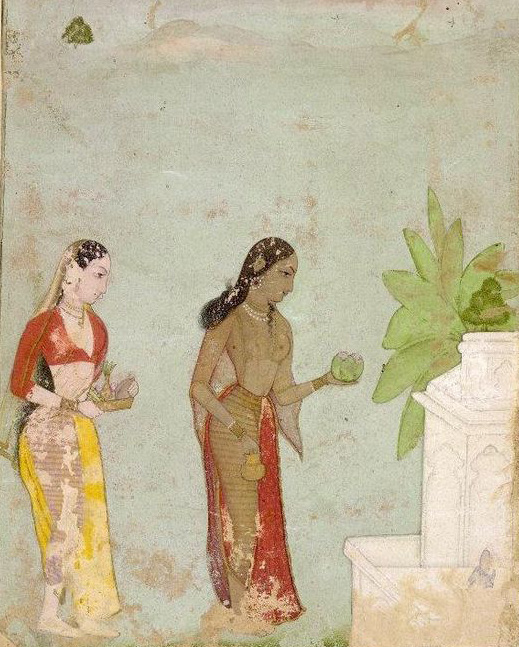
The first documentation of soap-like substances is dated 2800 BC. In these ancient times, Babylonians, Mesopotamians and Egyptians as well as Greeks and Romans were mixing in boiling water animal fats or vegetable oils together with an alkaline solution consisting of salts either agricultural based materials like ashes. +++  The Ebers papyrus (Egypt, 1550 BC) reveals that the ancient Egyptians mixed animal and vegetable oils with alkaline salts to produce a soap-like substance. The formula for soap consisting of water, alkali and cassia oil was written on a Babylonian clay tablet around 2200 BC . Hot caustic alkali solution, such as caustic soda (sodium hydroxide), acts on natural fats or oils, such as tallow or vegetable oil, to produce sodium fatty acid salt (soap) and glycerin (or glycerol). This saponification reaction is the basis for all soapmaking. If industrially produced fatty acids are used in place of natural fats or oils, the reaction with caustic soda yields soap and water instead of soap and glycerin. Raw materials and additives The major raw materials for soap manufacture are fat and alkali. Other substances, such as optical brighteners, water softeners, and abrasives, are often added to obtain specific characteristics. +++ Ọsẹ dúdú, literally translated as Black Soap, is an entirely plant-based soap originally formulated in Yorubaland, cultural region that spans the countries of Nigeria, Benin and Togo. As over the years the soap-making tradition had been widely spread from the Yoruba people over the surrouding areas of West-Africa, when entering a small cosmetic boutique of St-Louis in Senegal, among tones of wigs, shea jars and aphrodisiac powders I happened to find on the shelf a hatful of raw Ọsẹ dúdú bars for 200 CFA (about 30cents) each. It is back on that day that I gave away basically any sort of shower gel, body cleanser and shampoo. The making of this brown soap with almost no scent requires almost no capital and little technology. It is in facts produced from agro-based wastes derived from the Ashes of plants like tree barks, banana husks, plantain leaves and sometimes cocoa pods boiled in water with vegetable oils like coconut oil, palm oil or shea butter. +++ In natural soaps, the cleansing agent itself is the soap.  The word ‘soap’ here actually refers to the sodium salts of fatty acids.  These salts are produced when oil(or fats) are mixed with lye which then undergo a saponification reaction. The resulting product is a combination of soap and glycerin.  It is this soap that lends the natural skin cleanser its cleansing properties.  In synthetic soaps, the cleansing agents are usually artificially made detergents.  Sodium Lauryl Sulfate (SLS, also known as sodium laureth sulfate) is one such detergent commonly found in synthetic soaps.  The reason why manufacturers use SLS is because it is inexpensive, although it is known to be harsh on the skin and may cause irritation  (((ash in black soap, which gently exfoliates the skin due to its makeup from dried plants, offers “excellent solubility, consistency, cleansing, and lathering abilities))) Indigenous black soap is well known in African cultures as an ancient remedy for healthy skin. better than the modern industrial-made soaps +++ How it is made +++ Soaps for cleansing are obtained by treating vegetable or animal oils and fats with a strongly alkaline solution  alkaline solutione = lye = ashlye is a metal hydroxide traditionally obtained by leaching wood ashes, or a strong alkali which is highly soluble in water producing caustic basic solutions. “Lye” most commonly refers to sodium hydroxide (NaOH), but historically has been used for potassium hydroxide (KOH). Due to the large presence of Potassium in Banana peels, the lye derived from organic waste does not contain sodium hydroxide(caustic soda) as a source of lye. Instead, natural lye, or potassium hydroxide, is formed from the plantain ash. the ash that plays a core role due to its skin-cleansing abilities. +++ Composition and Benefits explain what are antioxidantsand free radicals +++ In chemistry, soap is a salt of a fatty acid  Ester hydrolyzed in the presence of an alkali produces the carboxylates (salts of parent carboxylic acids) and alcohols. The reaction is irreversible. Also significant is the fact that Indigenous soap is used to prevent and/or treat health-related issues. Soaps produced from wood ash, such as ọsẹ dúdú, are recognized and used in many different cultures around the world due to its efficient bactericidal and dermatological properties. Ọsẹ dúdú enjoys a reputation for improving or eliminating uneven skin tone and reducing razor bumps caused by ingrown hairs and skin rashes .The soap is also used in the treatment of many infectious diseases caused by microorganisms . In traditional medicine, the soap is a very common vehicle for the application of medicinal plants and also for the treatment of skin diseases +++ Shampoo Alternative Recipe This is a good alternative to regular sulfate shampoo that both cleanse the scalp and leave the hair moisturised without subjecting them to damage.  For a full overview on the topic see the post: No Shampoo Method. Ingredients Four cubes of Black Soap Two spoons of Aloe Vera Gel One spoon of Castor Oil One glass of hot Water For a review on the benefits of Aloe Vera Gel see post: Into Aloe vera Leaves References Ọsẹ Dúdú: Exploring the Benefits of Yoruba Indigenous Black Soap in Southwest, Nigeria” by Adedeji Oluwaseun Adewus,Olayinka Akanle “Metal analyses of ash derived alkalis from banana and plantain peels in soap making“ by I. Oluremi Olabanji, E. Ayodele Oluyemi and O. Solomon Ajayi in “African Journal of Biotechnology Vol. 11” “rough-beauty.com” – Handcrafted with Botanical Side illustration: “Two female devotees worshipping the tulsi plant”. Pahari School, Guler Style, 1750. Panjab Hills
The Magic of Karite

After 4 months in St-Louis, Senegal I made to reach my home in Sicily. Between wax fabrics and gris-gris talismans I could not resist framing in my bag a couple of big jars full of Raw  Shea Butter Karite´. This magical wonder is the fat extracted from the oily kernels within the nut´s seed of the Shea Tree (Vitellaria Paradoxa), native exactly of Sahel – region that stretches between the Atlantic Ocean and the Red Sea, from the Sahara Desert to the Sudanian Savannah. Covering thousands kilometers of grassfields from Senegal all the way across Ethiopia, the Shea Tree grows naturally, without irrigation either use of fertilizers or pesticides.

It is said that from the Land of Yam (current Sudan/Uganda) it was carried by caravans through the Nile Rivers and used as cosmetic oil by Queen of Sheba Nefertiti (1330/1370 BC), following Ancient Egypt´s Paraoh Cleopatra (69/10 BC). Heretofore Karite´s presence in these vast areas was costant and it was always embodied in the life of the people inhabiting them – implemented as skin enhancer, food´s taste intensifier, medicine supply as well as incorporated into cerimonial practices among certain ethnic groups.

Some Fulani brides, for example, in order to prepare for the Wedding use Shea butter to intensify the shine of their skin up to three months before the ceremony. Simultaneously, as part of Godja Initiation (Ritual of Flagellation) in which the groom is whiped several times on the chest to prove the necessary courage to be accepted by the bride´s parents as a honourable husband, a mix of Karite´ and honey is applied on the left wounds and bruises so to relieve him from the pain. (To read more about Fulani people and understand the Importance of Suffering among their communities I recommend you reading This Publication).

How is it made?
Often referred as Woman´s Gold, Karite´ is in facts one of Sahelian Africa´s few commodities that is totally under female domain. Being the only indigenous species able to remain undamaged during the drying season it endows with vital economic source millions of those inhabiting these semi-arid steppas quite hostile to growth and production.
Since childhood girls inherit from older women the shea-making craft and throughout their life they are conveyed into domestic environment with the essential skills to harvest and produce it.

Shea flowers appear and bloom between December and April. It is around May, at the early stage of the rainy season that the tree starts to bear fruits. All over the season, million rural women are involved in nuts-picking. Once enough nuts are gathered, the whole fruits are boiled and let sun-drying. Thereafter they are broken with a mortar and the kernel is manually extracted. The inner seeds are then cracked and roasted. Water is added untill the seed powder reach a liquid form, this chocolat-colour cream is then cooked for several hours untill the oil within begins to separate from the dark substance: here comes the butter that is finally  put through stirring untill it solidifies.
It is an immense work that can take up to 7 days.

Since global demand for Shea Butter had increased, rural women with their millenarian butter-making knowledge could have opportunity to be active enterpreneur of its international marketing – in some cases they do – however, 90% of the times their work is limited to nuts-picking. Low quality kernels are traded in the villages to be industrially post-processed so to “high-up” the quality according to food, cosmetic and luxury expectations. This refined product is globally provided by traders who often know very little of traditional methods. Presented to the market as “handmade”, it is often extracted whit hexane, therefore deprived of its natural color and smell, furthermore stripped out of minerals, vitamins and fatty acids that convey it healing properties. In these type of frameworks Sahel women are basically not enabled to gain a reasonable income for their skills and labour. That is why when buying imported products like Shea it is vital to choose Fair Trade cooperatives that ensure the workers behind it an equitable wage for their back-breaking efforts (This could be a good choise: Alaffia Foundation).


Composition and Properties
Raw Shea Butter is a complex vegetable oil that appears solid and melts at body temperature. Ivory to yellow color when unrefined it contains primarly Triglycerides: three molecules of Fatty Acids (oleic acid and stearic acid for the 85/90% and linoleic acid, palmitic acid, arachidic acid for 10/15%) that are linked to the alcohol Glycerol.
While Glycerol is a moisturising agent that pulls water into the outer layer of the skin, Fatty Acids are essential structural components of the membrane,  necessary for the growth and survival of a cell and therefore for human metabolic functions. Applied on the skin or ingested via nuts, seed or oils they encourage regeneration of cells and aid growth in a healthy body.
Another important component of Shea Butter is the high amount of Unsaponifiables it contains (5 to 15%). Unsaponifiables are lipids that can´t decompose into acid, alcohol or salt, this makes them responsable for re-fatting the epidermal while carrying fat-soluble, antioxidant vitamins like Vitamin E and Vitamin A.

In practical terms, Raw Karite´ provides all the principal elements to nourish, protect and heal skin and hair. It is emollient, brightening and toning. It reduces hair dryness and prevents its breakage. It protects from solar radiation and heals from sunburn. It can treat skin issues from inflammation, itching, eczema, wounds, to allergies and insect bites as well as acting as barrier for free radicals reducing oxidation stress and therefore signs of premature aging.


Hair Mask Recipe 

Here the recipe for a quite versatile Karite´ hair mask which I apply on the hair once a week and leave in by night, generally on the evening before the shampoo. I have been using it for about two months and it proved to be quite hydrating and conditioning. The hair look overall healthier, thicker and much more luminous than before.

Ingredients
Two Spoons of  Karite´
One spoon of  Virgin Olive Oil
One spoon of  Raw Honey
One whole  Egg

How to do
– Mix the ingredients in a bowl untill a homogenous cream is formed. In case the butter is too solid you can heat it in advance.
– Brush your hair while dry.
Slightly wet the hair.
– Apply the cream to the scalp untill the hair tips.
– Massage a couple of minutes the scalp.
– Wrap the hair into a piece of cloth.
– Leave it not less than 20 minutes up to all night.
Rinse it out with medium hot water.
Wash your hair.


The same blend without the egg works very well as a face mask.
Simply apply it all over the face excluded the area around the eyes and wash it out after about 20/30 minutes.


For a review on the benefits of Raw Honey see post: Lemon and Honey.


References
“Agbanga Karite” Fair Trade Cooperative
“Shea Butter Republic – State Power, Global Markets and the Making of an Indigenous Commodity” by Brenda Chaflin
“A Companion to Feminist Geography” edited by Lisa Nelson, Joni Seager

“Sustainability 2015 – The Evolution of Shea Butter’s “Paradox of paradoxa” by Julia Bello-Bravo, Peter N. Lovett, Barry R. Pittendrigh

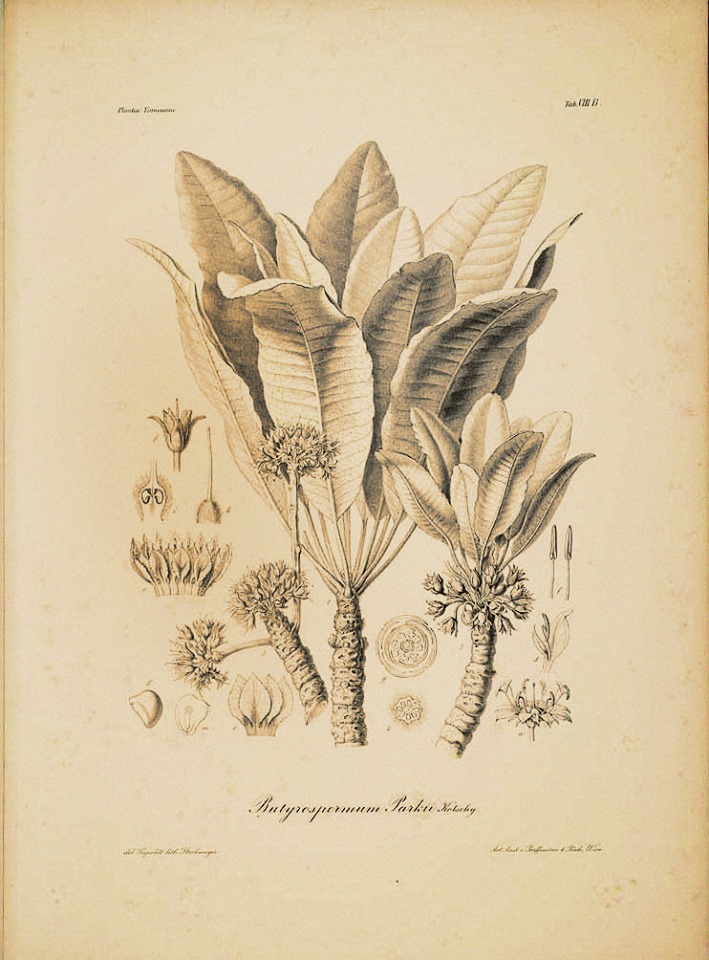
Side Illustration – “Vitellaria Paradoxa” www.plantillustration.org